

ACNE SURGERY: includes various surgical procedures used by the dermatologist or plastic surgeon for the treatment of acne and its complications.
An example of acne surgery is the manual removal of comedones and the drainage of pustules and cysts. When done correctly, acne surgery speeds resolution and rapidly enhances cosmetic appearance. Special instruments are used e.g. comedone extractors and a pointed-tip scalpel blade.
Comedones.
Removal of open comedones (blackheads) enhances the patient's appearance. By use of a special type of extractor, most comedones can easily be expressed with uniform, smooth pressure. Lesions that offer resistance are loosened and sometimes disengaged by inserting the point of a special blade into the blackhead and elevating. The orifice of the closed comedone must be enlarged before pressure can be applied. Following the angle of the follicle, the scalpel point is inserted with the sharp edge up approximately 1 mm into the tiny orifice. The blade is drawn slightly forward and up, then pressure is applied with the extractor to remove the sometimes surprisingly large quantity of soft, white material. Macrocomedones (whiteheads, microcystic acne) can also be treated with light cautery.
Pustules and cysts.
After the head of the white pustule is nicked with a special instrument, pustules are easily drained by pressing the material with the acne extractor. Cysts are preferably managed by intralesional injection because incision and drainage may cause scarring. Pustules and cysts that have a thin, effaced roof in which fluid contents are easily felt are drained through a small incision by manual pressure. To prevent scarring, a short incision (about 3 mm) should be made. After drainage, a special instrument may be inserted through the incision on the cyst in order to dislodge chunks of necrotic tissue.
Acne on back and the appearance industry
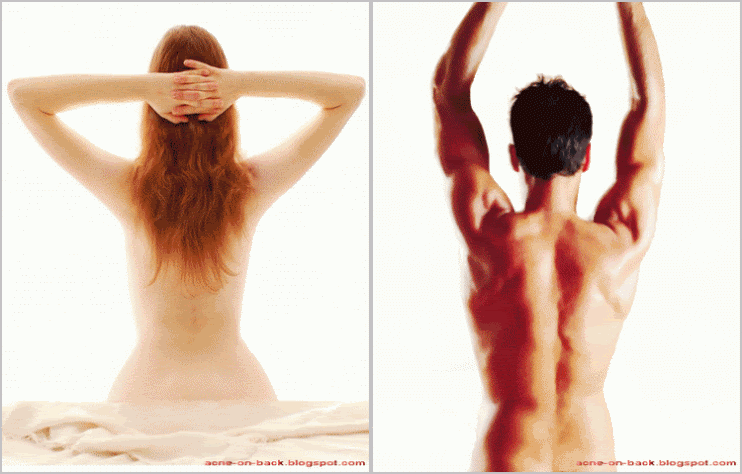 Being preoccupied with appearance, the acne on back sufferer usually have a negative self image, and may develop psychological problems.
Because the color, texture, and appearance of the skin, are important physical factors contributing to outer beauty; and when many people are more concerned with physical beauty, though inner beauty is more pleasing to the mind, real beauty would cease to matter. Needless to say that, it is not a person’s skin that makes them attractive but a combination of all the unique characteristics that they are.
The media, and television in particular, actively promote levels of attractiveness related to appearance and particular physical properties. Attractiveness has thus shaped people attitudes in favor of physical beauty in many life aspects, such as employment, social opportunities, friendship, s*xual behavior, and marriage. The media transmit messages concerning physical beauty, perfection and disfigurement, and usually offer suggestions and practical advice as to how the influence of these aspects can be reduced or altered. As they are promoting certain products, they are creating markets for advertisers at the same time. the media have propagated the idea that perfection is a normal thing in society and that those who are unattractive can easily gain this supposedly ‘normal’ appearance.
The concept of body image defined as our perception of the way that others see us, is therefore affected by any physical changes to the way that we look.
As acne develops in adolescence, a time when people are generally most sensitive about their appearance; symptoms such as depression or social anxiety reflect their real concern over body image.
The costs of treatment may also complicate the problem and can cause great distress.
The visibility of acne on back may attract attention in certain social situations, thus making the individual feel that they can’t keep their condition private or personal.The sufferer may find that some people react negatively towards them or treat them differently because of the way that they look.
Negative misconceptions about acne are still there; some people still think it is associated with a person’s inability to ‘properly take care of themselves or a lack of cleanliness and reactions to this can range from curiosity to rejection therefore, acne sufferers become socially withdrawn...to be continued.
Being preoccupied with appearance, the acne on back sufferer usually have a negative self image, and may develop psychological problems.
Because the color, texture, and appearance of the skin, are important physical factors contributing to outer beauty; and when many people are more concerned with physical beauty, though inner beauty is more pleasing to the mind, real beauty would cease to matter. Needless to say that, it is not a person’s skin that makes them attractive but a combination of all the unique characteristics that they are.
The media, and television in particular, actively promote levels of attractiveness related to appearance and particular physical properties. Attractiveness has thus shaped people attitudes in favor of physical beauty in many life aspects, such as employment, social opportunities, friendship, s*xual behavior, and marriage. The media transmit messages concerning physical beauty, perfection and disfigurement, and usually offer suggestions and practical advice as to how the influence of these aspects can be reduced or altered. As they are promoting certain products, they are creating markets for advertisers at the same time. the media have propagated the idea that perfection is a normal thing in society and that those who are unattractive can easily gain this supposedly ‘normal’ appearance.
The concept of body image defined as our perception of the way that others see us, is therefore affected by any physical changes to the way that we look.
As acne develops in adolescence, a time when people are generally most sensitive about their appearance; symptoms such as depression or social anxiety reflect their real concern over body image.
The costs of treatment may also complicate the problem and can cause great distress.
The visibility of acne on back may attract attention in certain social situations, thus making the individual feel that they can’t keep their condition private or personal.The sufferer may find that some people react negatively towards them or treat them differently because of the way that they look.
Negative misconceptions about acne are still there; some people still think it is associated with a person’s inability to ‘properly take care of themselves or a lack of cleanliness and reactions to this can range from curiosity to rejection therefore, acne sufferers become socially withdrawn...to be continued.
Monday, June 23, 2008
 ACNE SURGERY
