

Acne Treatment
The determination of the therapeutic efficacy of medications used in acne is not a simple task, and it is possible to find many favorable therapeutic reports for agents that are obviously of little value in the treatment of acne. In this post, no attempt is made to be all-inclusive; only the more commonly used or useful modalities are discussed.
In general, there are four major principles governing the therapy of acne, and the individual therapeutic modalities listed below are related to these principles, where possible. These principles are: (1) correct the altered pattern of follicular keratinization; (2) decrease sebaceous gland activity; (3) decrease the follicular bacterial population, particularly the P. acnes population, and inhibit the production of extracellular inflammatory products (either directly or indirectly) by inhibiting the bacterial organisms; and (4) produce an anti-inflammatory effect. The first of these treatment principles, namely, changing the altered pattern of follicular keratinization, should be the primary form of therapy in noninflammatory acne; the rest of the modalities are primarily designed for use in inflammatory acne. Nonetheless, because altered follicular keratinization is the starting point for the development of inflammatory acne, therapy directed at this abnormality also should be of value in inflammatory acne.
Acne on back and the appearance industry
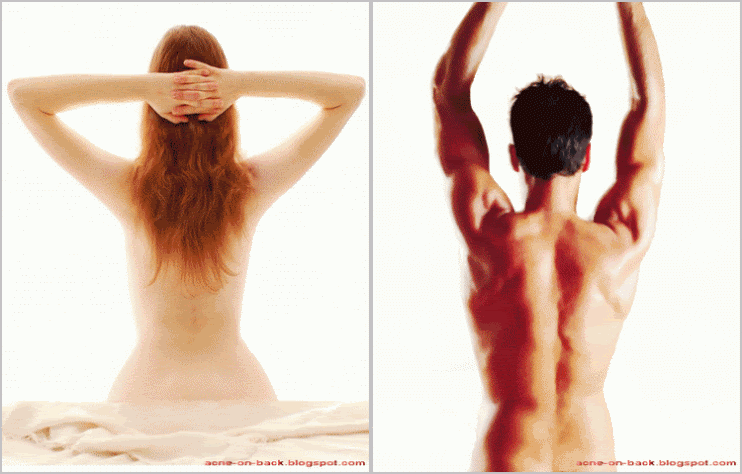 Being preoccupied with appearance, the acne on back sufferer usually have a negative self image, and may develop psychological problems.
Because the color, texture, and appearance of the skin, are important physical factors contributing to outer beauty; and when many people are more concerned with physical beauty, though inner beauty is more pleasing to the mind, real beauty would cease to matter. Needless to say that, it is not a person’s skin that makes them attractive but a combination of all the unique characteristics that they are.
The media, and television in particular, actively promote levels of attractiveness related to appearance and particular physical properties. Attractiveness has thus shaped people attitudes in favor of physical beauty in many life aspects, such as employment, social opportunities, friendship, s*xual behavior, and marriage. The media transmit messages concerning physical beauty, perfection and disfigurement, and usually offer suggestions and practical advice as to how the influence of these aspects can be reduced or altered. As they are promoting certain products, they are creating markets for advertisers at the same time. the media have propagated the idea that perfection is a normal thing in society and that those who are unattractive can easily gain this supposedly ‘normal’ appearance.
The concept of body image defined as our perception of the way that others see us, is therefore affected by any physical changes to the way that we look.
As acne develops in adolescence, a time when people are generally most sensitive about their appearance; symptoms such as depression or social anxiety reflect their real concern over body image.
The costs of treatment may also complicate the problem and can cause great distress.
The visibility of acne on back may attract attention in certain social situations, thus making the individual feel that they can’t keep their condition private or personal.The sufferer may find that some people react negatively towards them or treat them differently because of the way that they look.
Negative misconceptions about acne are still there; some people still think it is associated with a person’s inability to ‘properly take care of themselves or a lack of cleanliness and reactions to this can range from curiosity to rejection therefore, acne sufferers become socially withdrawn...to be continued.
Being preoccupied with appearance, the acne on back sufferer usually have a negative self image, and may develop psychological problems.
Because the color, texture, and appearance of the skin, are important physical factors contributing to outer beauty; and when many people are more concerned with physical beauty, though inner beauty is more pleasing to the mind, real beauty would cease to matter. Needless to say that, it is not a person’s skin that makes them attractive but a combination of all the unique characteristics that they are.
The media, and television in particular, actively promote levels of attractiveness related to appearance and particular physical properties. Attractiveness has thus shaped people attitudes in favor of physical beauty in many life aspects, such as employment, social opportunities, friendship, s*xual behavior, and marriage. The media transmit messages concerning physical beauty, perfection and disfigurement, and usually offer suggestions and practical advice as to how the influence of these aspects can be reduced or altered. As they are promoting certain products, they are creating markets for advertisers at the same time. the media have propagated the idea that perfection is a normal thing in society and that those who are unattractive can easily gain this supposedly ‘normal’ appearance.
The concept of body image defined as our perception of the way that others see us, is therefore affected by any physical changes to the way that we look.
As acne develops in adolescence, a time when people are generally most sensitive about their appearance; symptoms such as depression or social anxiety reflect their real concern over body image.
The costs of treatment may also complicate the problem and can cause great distress.
The visibility of acne on back may attract attention in certain social situations, thus making the individual feel that they can’t keep their condition private or personal.The sufferer may find that some people react negatively towards them or treat them differently because of the way that they look.
Negative misconceptions about acne are still there; some people still think it is associated with a person’s inability to ‘properly take care of themselves or a lack of cleanliness and reactions to this can range from curiosity to rejection therefore, acne sufferers become socially withdrawn...to be continued.
Thursday, June 5, 2008
 Acne Treatment
